0
Tough Broad
It needed an object. It was you. Dolly
A meta-poem documenting the creation of its own opening line—"What the spirit wants is different from what the mind can conceive or the body accomplish"—which appeared mid-text-message during a conversation with the Muse about nighttime cramps, was mistaken by her for a quote, and prompted the speaker's deflective response: the bunny spouts nonsense.
The poem is structured as a transcript with annotations, a kind of writer’s commentary on a moment of accidental aphorism. The opening line is presented first, isolated, as the artifact: “What the spirit wants … Is different from what the mind can conceive or the body accomplish.” The ellipsis after “wants” is the line’s most important punctuation—a pause that converts what could be a simple declaration into a meditation, the speaker stopping mid-thought to consider whether the spirit wants something specific or just wants in general.
The line itself is among the catalog’s most philosophically compressed observations. Three nouns (spirit, mind, body) and three verbs (wants, conceive, accomplish) are arranged in a hierarchy of frustration: the spirit has desires that exceed the mind’s imagination, and the mind has concepts that exceed the body’s capacities. The result is a triple gap—what we long for, what we can think, what we can do—and the gaps between them are where most human suffering lives. The body can’t do what the mind can imagine; the mind can’t imagine what the spirit wants. Each layer is trapped by the limitation of the layer below it.
The annotation that follows reveals the line’s origin: a text conversation about cramps, a Muse who experiences them at night, and the line that “popped into existence” mid-conversation. The verb “popped” is the speaker’s most accurate description of the creative process across the catalog: the lines don’t arrive through effort but through pressure suddenly released, the way a thought breaks the surface of water without warning. The rabbit-hole reference connects to “Dreams,” “Good Morning,” “What the Hamster Thought”—the catalog’s recurring image for the deep creative state where the writer is no longer choosing the words.
The Muse’s response—”That’s an excellent quote”—is the poem’s structural turn. She assumes the line is borrowed; the speaker confirms it isn’t. Her follow-up question—”You came up from the Rabbit Hole with that writing?”—is genuine astonishment, the kind a reader might offer a writer when the work seems too good to be original. She is, in this exchange, the catalog’s most credible Muse: not just inspiring the writing but recognizing it as writing when it appears, which is itself a form of creative collaboration.
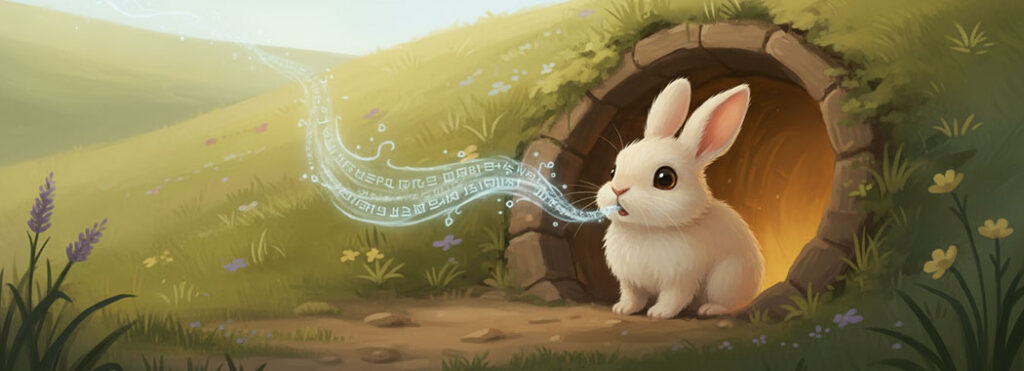
The speaker’s response is the poem’s title and its philosophical dismount: “The bunny spouts nonsense.” The bunny is the rabbit-hole’s resident, the small creature whose burrow the speaker keeps falling into to produce these accidental aphorisms. “Spouts” is the verb of an oracle, a fountain, a creature who produces what comes through it without filtering. “Nonsense” is the speaker’s deflection—calling the line nonsense protects him from claiming it as wisdom. But the closing two words—”Cause it does”—affirm the bunny’s productive capacity. The bunny spouts nonsense, yes, and the nonsense turns out to be among the most compressed wisdom the catalog has produced.
The poem’s deepest joke is structural: it presents the line first as artifact, then narrates the moment of its creation, then deflects the line’s authority back into the rabbit hole. The opening sentence is the truest thing the speaker has said, and the speaker spends the remaining lines explaining that he isn’t responsible for it.
A poem whose opening line could stand alone as one of the catalog’s most philosophically valuable contributions, and whose remaining lines are an exercise in disowning the line that earned the poem its place. The triple-gap structure of the opening (spirit/mind/body, wants/conceive/accomplish) compresses an entire theory of human limitation into a single sentence, and the ellipsis after “wants” gives the sentence the rhythm of a thought arriving in real time rather than a declaration prepared in advance. The line is the kind of thing that would sound at home in a meditation manual, a philosophy seminar, or a notebook of late-night observations—and the poem is honest about it appearing in a text message about leg cramps.
The annotation structure is the poem’s bravest formal choice. By presenting the aphorism first and then narrating its origin, the speaker creates a structural inversion: the conclusion arrives before the context, the wisdom before the conversation that produced it. This mirrors how creative thought actually works—the insight precedes the explanation, and the explanation is constructed afterward to make the insight seem inevitable. The cramps-in-the-night context is the poem’s most charming detail: the spirit wants relief from cramps, the mind can conceive of muscle physiology, but the body still aches at 3 AM. The original conversation embedded the aphorism in something so ordinary that the line had to escape just to be heard.
The Muse’s misidentification of the line as a quote is the poem’s most flattering portrait of her in this session. She reads the line as good enough to be borrowed, which is the highest praise a reader can give a writer who is still uncertain of his own authority. Her follow-up question—”You came up from the Rabbit Hole with that writing?”—uses the speaker’s own vocabulary (rabbit hole) to validate his creative process, suggesting that she has been listening to his self-description of how he writes and now applies it back to him as recognition.
“The bunny spouts nonsense” is the catalog’s most self-effacing response to having produced something good. The deflection works because the bunny is an absurd authority figure—a small creature in a burrow producing wisdom—and naming the source of the line as the bunny lets the speaker disown his accomplishment without denying it occurred. The closing “Cause it does” is the affirmation that completes the disavowal: yes, the bunny really does produce these things, and yes, what the bunny produces is real.
Where the poem could deepen is in the gap between the opening aphorism and its commentary—a single image of the conversation, the speaker’s hand on the phone, the moment the line “popped into existence,” might have given the meta-narrative a sensory anchor. But the poem’s distance from the moment is part of its method: this is a writer reflecting on writing, and the reflection is what the poem is for. A poem that proves the best aphorisms arrive mid-text-message about something else entirely.
What the spirit wants … Is different from what the mind can conceive or the body accomplish.
For reference,
I was discussing what caused cramps with the Muse.
She has that problem at night.
And that. Popped into existence.
I sent that line to her in a text message.
I told her earlier that I fell into the rabbit hole to write the previous email I sent you.
She won’t see that one till in the future.
Her response after reading that short one was … “That’s an excellent quote.”
I responded, it wasn’t a quote.
She said: “You came up from the Rabbit Hole with that writing?”.
I said: “The bunny spouts nonsense.”
Cause it does.





The original idea: Consommé’ It’s a soup thing.






Does inspiration derive from the void? No. It’s

Somehow, Someway, Someday, Somewhere, Someone, Something, Sometime, Somehow..


When you know the final line before you
For the inspiration behind every: Ha! for Her








The personal version: one of individual love. Lyric

CooooooooBaaaaaaaaa! Logically, Geographically, Culturally, Linguistically, Legally, Economically, Strategically,

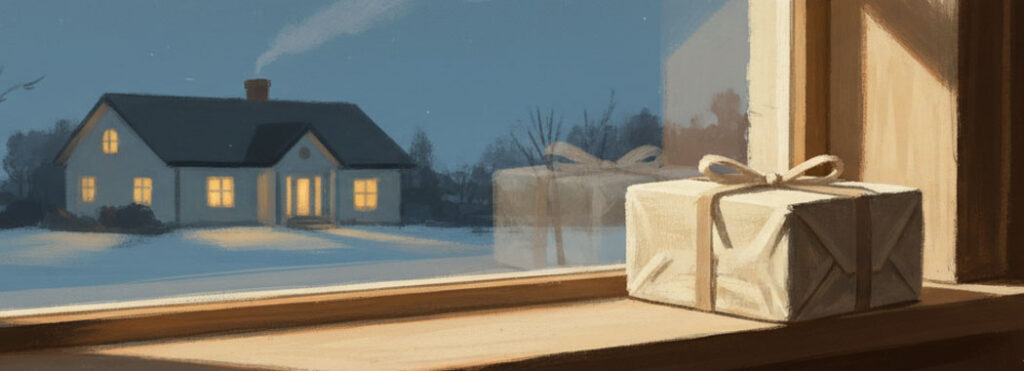
Santa readies his sleigh, laden with gifts— and

You’re a good-looking woman. Terribly full of logic.

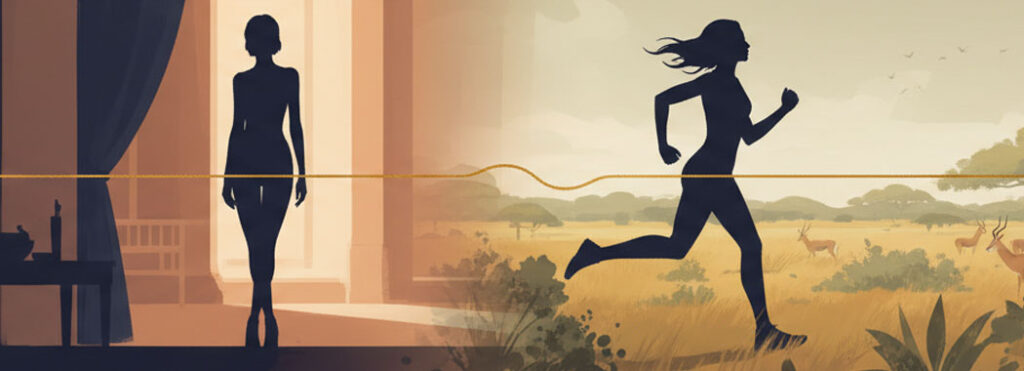
Barefoot at winter’s fading light, I dance—unrobed, unafraid.


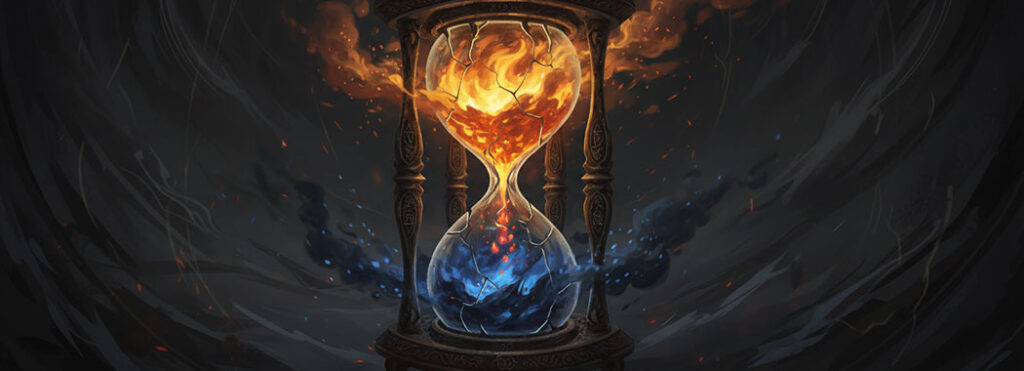
Time The first fire. Is my friend And

Launched at 120425;3:26AM. I fell asleep dreaming peacefully










Death—Rebirth Requiem—Resurrection Life—Forever The veil of life, lifted-

The Solitaire RazzleDazzleBerry on a Plate. A picture






Drunk— in misery and eternal sadness my life




After an excellent workout, the creative side overwhelms—


My Lovely Lady In your lovely ways, you






A deliciously delightful distraction of conversation for a

Note: this started with a conversation with my
What’s more exacting? The physical act of painting?









Burning Man The festival that embodies temporary community,



A Spiritual Tome following the Dance of the












(Self-Portrait–A Veritable Fable) The HoneyBeeBard Always in search














A life-changing trip … A fifteen-minute read. From


A life-changing trip … A fifteen-minute read. From






My Personal Greek Tragedy Diamonds of Reflection (Prologue:











Poetry Inspiration flows from every direction – sometimes



Dave’s Acronyms Akronyms. Akronomeous. Akrogreek, Akroignoramuse. Meaningless words,


Waiting to be explored That amazing sense of



Howdy! What’s on your mind? I had this


Very little food for two days Scared to

















A view of you Pleasing, pleasing, very pleasing











A Muse Threads that Flux and Contact with